Xiaomi Mi MIX 3 Review
10 Dicembre 2018, 08:29:41

You can also check out the current discounts on top brand smartphones.
Design, build and controls
The Mi MIX series has always been about high-end design and innovation but also experiment. It was the Mi MIX that established the full-screen category in the smartphone market. With the Mi MIX 3, Xiaomi continues to pursue the goal of creating a full-screen front design and introduces a new technology for a smartphone slider based on neodymium magnets (NdFeB), or neo magnets. They are the strongest type of permanent magnets commercially available. This technology is different from the standard motorized pop-up camera or front panel and here's how Xiaomi described it: "Once the screen is pushed down, the magnetic mechanism immediately kicks in and finishes the opening in a snap with just the right amount of force. Xiaomi has dedicated substantial resources to the production process to ensure the slider has a life expectancy of 300 000 cycles in lab tests." The sliding action can be associated with various functions. By default, when you slide down, this opens the front-facing camera but you can also choose for it to open the dialer or App Vault. You can hear a sound when the screen slides, which can be customized as well. In reality, this solutions seems very practical as manual sliders are less prone to failure than motorized mechanisms, however, sliding up and down does require strong pressure and some might not find this type of slider comfortable. In addition, when you take a look at the profile of the device, you can see an opening between the two parts, which in time, we fear, will be easily filled with dust or small threads from clothing.
 As long as it concerns materials, the Mi MIX 3 combines 2.5D curved Corning Gorillas Glass for the front, aluminium alloy for the frame and four-side curved ceramics for the back. The main colour variant is black and we are reviewing a black unit but for the first time in the Mi MIX series, Xiaomi introduces colours for the non-special edition variants that are not black or white. These are emerald green and sapphire blue. The first time emerald green has been introduced on the Mi MIX 2S Special Edition. The Mi MIX 3 Forbidden City Special Edition has a colour closer to the sapphire blue and corresponding branding. Actually, the two colour variants different from black are available only in the 8GB+128GB version of the Mi MIX 3. The Forbidden City Special Edition is equipped with 10GB of RAM and 256GB of storage.

 Xiaomi Mi MIX 3 is 0.21 mm narrower than its predecessor measuring 74.69 mm in width. It is taller than the smartphones from the Mi MIX 2 generation but shorter than the ones from the first generation of the series measuring 157.89 mm in height. It is also the thickest model from the series with a waistline of 8.46 mm mainly due to the sliding mechanism that separates the device in two parts. When compared to other smartphones with 6.4-inch displays and battery capacities close to 3200 mAh, it is clearly visible that the Mi MIX 3 is one of the narrowest and shortest models. However, it is one of the thickest but this is normal for devices with any type of sliders - Oppo Find X is 9.6 mm thick, the Honor Magic 2 is 8.3 mm thick, etc. Xiaomi Mi MIX 3 is the heaviest among those with a weight of 218 grammes.

 The front is covered with a 2.5D curved Corning Gorilla Glass of unspecified generation. Most of the front of the device is taken by the notchless display and on the Mi MIX 3, Xiaomi pushes the screen-to-body ratio to 85.27%. For comparison, the Mi MIX 2S has an 82.21% screen-to-body ratio and the Mi MIX 2 has an 81.05% ratio. The field of view is maximized by rounding the corners. The side bezels, forehead and chin are very thin. The thinner bezels are also possible due to the customized antenna design which reduces the antenna space 72%. There's a small slit on the top bezel for the earpiece. When you slide down the screen, this unveils the top part of the rear module which houses the two front cameras, a second slit for the earpiece, the light/proximity sensor and the 24MP Dual Camera sign. For the first time in the Mi MIX series, there are two front cameras and moreover - they take the traditional place above the display. The chin is 4.46 mm thinner compared to the Mi MIX 2S one. The navigation bar is on-screen only. You can customize it or completely remove it and use on-screen gestures instead. This can be done from the Full-screen menu in the System settings.

 The back of the Mi MIX 3 is made of ceramics which is curved on all 4 sides. The two lateral curves are more prominent for providing better handheld experience and a steadier grip. The ceramic material tends to be fragile when dropped, slippery to the touch and prone to attracting fingerprints, so do have this in mind and use your device with a protective case. The one that's provided in the package is not flexible and has an opening to allow for the slider to go up and down. The back houses the dual camera module which is vertically aligned in the top left corner of the handset. It protrudes a bit and has a dual-LED flash in between the two cameras. The fingerprint sensor is in the centre of the upper half. At the bottom of the handset, the "MIX by Xiaomi" sign is imprinted.

 The top frame has only a microphone hole in it. The bottom houses a USB Type-C 2.0 port with two speaker grilles on both sides for symmetry. The left one covers the main microphone and the right one - the single, bottom-firing speaker. The left frame is where the dual Nano-SIM card tray sits with the dedicated MI AI physical button below it. With the same shape and size and at the same level but on the right frame, you will see the Power button. The Volume Up/Down button is above it.


Recensioni più recenti
Lista di recensioni più recenti su dispositivi mobili fatte da noi
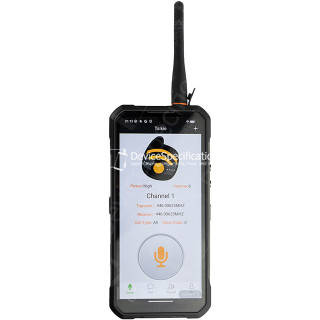
Oukitel WP61 Plus Review
Dimensioni: 85 x 179.5 x 27.5 mm
Peso: 651 g
SoC: MediaTek Dimensity 7025 (MT6855V)
Processore: 2x 2.5 GHz ARM Cortex-A78, 6x 2.0 GHz ARM Cortex-A55, Numero di core: 8
Processore grafico: IMG BXM-8-256, 950 MHz
Memoria RAM: 12 GB, 3200 MHz
Memoria interna: 512 GB
Display: 6.78 in, IPS, 1080 x 2460 pixel, 24 bit
Batteria: 20000 mA·h, Li-Polymer (litio-ione-polimero)
Sitema operativo: Android 16
Fotocamera: 12000 x 9000 pixel, 2560 x 1440 pixel, 25 fps
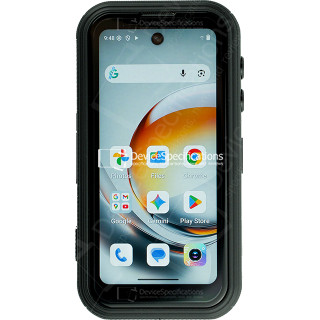
FOSSiBOT F116 Pro Review
Dimensioni: 59.6 x 114.5 x 23 mm
Peso: 207 g
SoC: MediaTek Dimensity 7300 (MT6878)
Processore: 4x 2.5 GHz ARM Cortex-A78, 4x 2.0 GHz ARM Cortex-A55, Numero di core: 8
Processore grafico: ARM Mali-G615 MC2
Memoria RAM: 12 GB, 2133 MHz
Memoria interna: 256 GB
Display: 4 in, IPS, 540 x 1168 pixel, 24 bit
Batteria: 3700 mA·h, Li-Polymer (litio-ione-polimero)
Sitema operativo: Android 16
Fotocamera: 8192 x 6144 pixel, 3840 x 2160 pixel, 30 fps

REDMAGIC 11 Air Review
Dimensioni: 76.54 x 163.82 x 7.85 mm
Peso: 207 g
SoC: Qualcomm Snapdragon 8 Elite (SM8750-AB)
Processore: 2x 4.32 GHz, 6x 3.53 GHz, Numero di core: 8
Processore grafico: Qualcomm Adreno 830, 1100 MHz
Memoria RAM: 12 GB, 16 GB, 4800 MHz
Memoria interna: 256 GB, 512 GB
Display: 6.85 in, Q10 AMOLED, 1216 x 2688 pixel, 30 bit
Batteria: 7000 mA·h, Li-Polymer (litio-ione-polimero)
Sitema operativo: Red Magic OS 11.0 (Android 16)
Fotocamera: 8182 x 6144 pixel, 7680 x 4320 pixel, 30 fps
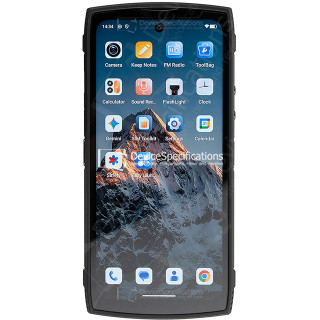
Lagenio Panther 2 Pro Review
Dimensioni: 82 x 175.4 x 11.3 mm
Peso: 266 g
SoC: Unisoc T7250
Processore: 2x 1.8 GHz ARM Cortex-A75, 6x 1.6 GHz ARM Cortex-A55, Numero di core: 8
Processore grafico: ARM Mali-G57 MP1, 850 MHz
Memoria RAM: 8 GB, 1866 MHz
Memoria interna: 256 GB
Display: 6.7 in, IPS, 720 x 1600 pixel, 24 bit
Batteria: 5150 mA·h, Li-Polymer (litio-ione-polimero)
Sitema operativo: Android 15
Fotocamera: 8160 x 6128 pixel, 1920 x 1080 pixel, 30 fps

Oukitel WP55 Pro Review
Dimensioni: 81 x 172.2 x 15.3 mm
Peso: 360 g
SoC: MediaTek Dimensity 7025 (MT6855V)
Processore: 2x 2.5 GHz ARM Cortex-A78, 6x 2.0 GHz ARM Cortex-A55, Numero di core: 8
Processore grafico: IMG BXM-8-256, 950 MHz
Memoria RAM: 16 GB, 3200 MHz
Memoria interna: 512 GB
Display: 6.6 in, IPS, 1080 x 2408 pixel, 24 bit
Batteria: 11000 mA·h, Li-Polymer (litio-ione-polimero)
Sitema operativo: Android 15
Fotocamera: 12000 x 9000 pixel, 2560 x 1440 pixel, 30 fps

FOSSiBOT F107 Pro Review
Dimensioni: 90.6 x 190.1 x 39.95 mm
Peso: 910 g
SoC: MediaTek Dimensity 7300 (MT6878)
Processore: 4x 2.5 GHz ARM Cortex-A78, 4x 2.0 GHz ARM Cortex-A55, Numero di core: 8
Processore grafico: ARM Mali-G615 MC2
Memoria RAM: 12 GB, 2133 MHz
Memoria interna: 512 GB
Display: 6.95 in, IPS, 1080 x 2460 pixel, 24 bit
Batteria: 28000 mA·h, Li-Polymer (litio-ione-polimero)
Sitema operativo: Android 15
Fotocamera: 16320 x 12288 pixel, 3840 x 2160 pixel, 30 fps

REDMAGIC 11 Pro Global Review
Dimensioni: 76.54 x 163.82 x 8.9 mm
Peso: 230 g
SoC: Qualcomm Snapdragon 8 Elite Gen 5 (SM8850-AC)
Processore: 2x 4.61 GHz Oryon, 6x 3.63 GHz Oryon, Numero di core: 8
Processore grafico: Qualcomm Adreno 840 (829), 768 MHz
Memoria RAM: 12 GB, 16 GB, 24 GB, 5333 MHz
Memoria interna: 256 GB, 512 GB, 1024 GB
Display: 6.85 in, AMOLED, 1216 x 2688 pixel, 30 bit
Batteria: 7500 mA·h, Li-Polymer (litio-ione-polimero)
Sitema operativo: Red Magic OS 11 (Android 16)
Fotocamera: 8182 x 6144 pixel, 7680 x 4320 pixel, 30 fps

Ulefone Armor Pad 5 Ultra Review
Dimensioni: 269.7 x 179.5 x 27.8 mm
Peso: 1600 g
SoC: MediaTek Dimensity 7400X (MT6878V/TFZA)
Processore: 4x 2.6 GHz ARM Cortex-A78, 4x ARM Cortex-A55, Numero di core: 8
Processore grafico: ARM Mali-G615 MC2
Memoria RAM: 12 GB, 2133 MHz
Memoria interna: 512 GB
Display: 10.95 in, IPS, 1920 x 1200 pixel, 24 bit
Batteria: 24200 mA·h, Li-Polymer (litio-ione-polimero)
Sitema operativo: Android 15
Fotocamera: 9280 x 6920 pixel, 3840 x 2160 pixel, 30 fps
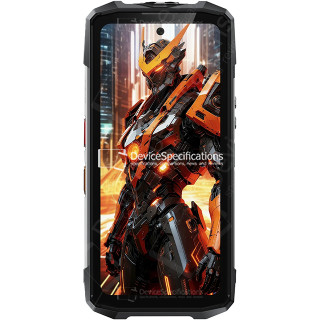
FOSSiBOT F113 Review
Dimensioni: 89.2 x 186.2 x 31.6 mm
Peso: 699 g
SoC: MediaTek Dimensity 7050 (MT6877V)
Processore: 2x 2.6 GHz ARM Cortex-A78, 6x 2.0 GHz ARM Cortex-A55, Numero di core: 8
Processore grafico: ARM Mali-G68 MC4, 950 MHz
Memoria RAM: 12 GB, 2133 MHz
Memoria interna: 256 GB
Display: 6.78 in, IPS, 1080 x 2460 pixel, 24 bit
Batteria: 20000 mA·h, Li-Polymer (litio-ione-polimero)
Sitema operativo: Android 15
Fotocamera: 8120 x 6180 pixel, 3840 x 2160 pixel, 30 fps