Samsung Galaxy S9+ Review
31 March 2018, 06:50:27

Display
The Galaxy S9+ is equipped with the same Dual-Edge Infinity Display used by the Galaxy S8+. It uses a 6.2-inch Super AMOLED panel with a WQHD+ resolution (1440 x 2960) and 18.5:9 aspect ratio. It takes up 83.61% of the total front surface of the body, which is protected by a 3D curved Corning Gorilla Glass 5. The same glass protects the back. The device arrives with a default FHD+ resolution and in case you want to enjoy the screen in its native one, you have to change to WQHD+ from the Settings. In addition, the diagonal size is measured if the display were a full rectangle. As long as it concerns software provision, the Display menu offers plenty of options for taking the most out of what seems to be one of the most high-tech smartphone displays on the market. These include a blue light filter, screen and font zoom, a choice of screen resolutions, and four pre-calibrated display modes - Adaptive display, AMOLED cinema, AMOLED photo, and Basic. The first is the native one, and the other three are specially calibrated to cover a certain colour gamut. All these features are addressed in detail in the Software - Settings Menu section of this review. Finally, the Galaxy S9+ display supports the HDR10 standard, which is a typical feature of high-end smart TVs, and the panel holds the Mobile HDR Premium certificate from the UHD Alliance. In theory, Active Matrix Organic LED (AMOLED) displays consume less power and provide faster pixel switching response times. By simply switching off the pixels needed to display the black colour, they are able to display "infinite black". They also have the ability to provide more power to each pixel with the decrease of the white area that has to be displayed on the screen. Therefore, when assessing OLED displays, one must take into account the Average Picture Level (APL) of such units. The APL graph below shows the brightness of the screen of our review unit in the default colour mode according to the percentage of the white area displayed on it compared to a full white display. We use ten APL values, respectively for a white area that takes up 10%, 20%, 30%, etc. till 100% of the display. In addition, we have measured the brightness of both the S9+ display with a moderate ambient light and an intensive ambient light to demonstrate the average and peak brightness levels of the unit. The Auto brightness and the default Adaptive display mode are on. The latter provides the highest white luminance values (the screen is brighter) compared to the other three modes and is the native wide colour gamut mode of the display.
 The APL graph showing the screen brightness change in moderate ambient light reveals a range of white luminance from 378.355 cd/m2 to 480.948 cd/m2. The APL graph that depicts the screen brightness change in intensive ambient light unveils a range of white luminance from 624.854 cd/m2 to 883.146 cd/m2. These results show that the brightness of the S9+ we review is lower than the one of the S9 unit we have already reviewed. This is more clearly observed in intensive ambient light conditions. Of course, you still get a very bright display, which allows you to read any content in direct sunlight without any effort. The display panel features Samsung's Pentile Diamond Pixels sub-pixel arrangement, which has several distinctive features. The blue and the red sub-pixels have a diamond shape and both are quite large, with the blue ones being slightly larger. On the other hand, the green sub-pixels are visibly smaller and oval. Respectively, the number of the blue and red sub-pixels is almost twice as small as the number of the green sub-pixels - 403 sub-pixels per inch for the blue and red against 570 sub-pixels per inch for the green. Viewing angles are perfect no matter which display mode is on.
Luminance, contrast, colour temperature (Adaptive display mode)
In moderate ambient light conditions the maximum brightness measures 378.355 cd/m2. With an intensive ambient light, the brightness under this mode can go over 880 nits. Blacks are infinite and the contrast is great, no doubt about it. The colour temperature is deliberately colder than the golden level of around 6500 K and measures 7900 K, but you can manually adjust it in a range from 6800 K to 8800 K via the slider in the Display settings.| Brightness | White luminance | Black luminance | Contrast | Color temperature |
|---|---|---|---|---|
| 100 % | 378.355 cd/m2 | 0.000 cd/m2 | - | 7904 K |
| 75 % | 229.415 cd/m2 | 0.000 cd/m2 | - | 7874 K |
| 50 % | 143.73 cd/m2 | 0.000 cd/m2 | - | 7924 K |
| 25 % | 24.190 cd/m2 | 0.000 cd/m2 | - | 7896 K |
| 0 % | 2.671 cd/m2 | 0.000 cd/m2 | - | 7871 K |
Xiaomi Mi 5s Plus | 645.889 cd/m2 |
UMIDIGI S2 Pro | 645.024 cd/m2 |
Ulefone Armor Pad 5 Ultra | 644.57 cd/m2 |
Cubot X19 | 644.401 cd/m2 |
Oukitel RT3 | 643.38 cd/m2 |
Cubot Pocket 3 | 634.53 cd/m2 |
Cubot KingKong Mini 4 | 633 cd/m2 |
Ulefone Armor 33 Pro | 628.68 cd/m2 |
Ulefone Armor 17 Pro | 627.618 cd/m2 |
UMIDIGI S2 | 625.524 cd/m2 |
Samsung Galaxy S9+ Exynos | 624.854 cd/m2 |
Oukitel WP60 | 624.11 cd/m2 |
Ulefone Armor 23 Ultra | 623.15 cd/m2 |
Bluboo S8+ | 622.044 cd/m2 |
Xiaomi Mi 6 | 620.987 cd/m2 |
Asus ZenFone 3 ZE552KL | 615.106 cd/m2 |
Blackview R7 | 610.649 cd/m2 |
AGM G3 Pro | 609.832 cd/m2 |
Xiaomi Mi 9T | 609.507 cd/m2 |
AGM H5 | 604.168 cd/m2 |
Elephone S3 | 602.861 cd/m2 |
Adaptive display mode
The Adaptive display mode is native to the display and has the widest colour gamut coverage. It is activated by default and provides the highest possible brightness levels in moderate and intensive ambient light conditions and has extensive options for customisation, including an adjustable temperature of the white point, RGB sliders for white colour corrections, and a screen edge colour balance option. It covers 142% of the sRGB colour gamut and 113% of the DCI-P3 one. In low light conditions the colours do look more saturated, however, in bright environments, including office spaces, this is actually the preferred mode to use as it compensates the colour wash out due to the reflected light. At moderate- to intensive-levels of ambient light, the Adaptive mode also displays colours more accurately than the other three modes as they are calibrated to offer more colour accuracy at low to normal ambient light.


AMOLED cinema mode
The AMOLED cinema mode covers almost 100% of the DCI-P3 colour space with excellent colour accuracy for this gamut. This coverage is one of the main prerequisites to display HDR content along with a very high brightness of nearly 1000 nits, deep blacks and excellent contrast. This mode has been achieved after deliberate calibration of the display. The CIE diagram of our review unit shows an especially wider coverage of the green and red areas.


AMOLED photo mode
The AMOLED photo mode is deliberately calibrated to provide excellent coverage of the Adobe RGB colour gamut (almost 100%). As its name suggests, it will be perfect for previewing and editing photos and using advanced imaging applications. Compared to the AMOLED cinema mode it offers a more limited coverage of the red colour area and a slightly decreased, but still wide coverage of the green one. Blue coverage is slightly limited, too. Colour accuracy in the context of the Adobe RGB gamut is excellent.


Basic mode
The fourth and final display mode is called Basic and is deliberately calibrated to cover 100% of the sRGB / Rec.709 colour space, which in terms of everyday use you find on most web content, non-professional photos and videos, computer content, etc. Calibration is almost razor-sharp accurate.


Most recent reviews
A list of the most recent reviews of mobile devices made by us
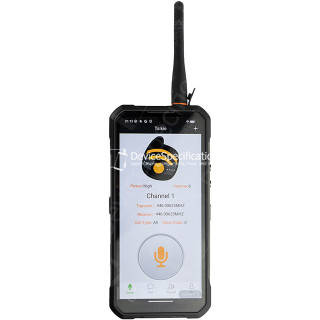
Oukitel WP61 Plus Review
Dimensions: 85 x 179.5 x 27.5 mm
Weight: 651 g
SoC: MediaTek Dimensity 7025 (MT6855V)
CPU: 2x 2.5 GHz ARM Cortex-A78, 6x 2.0 GHz ARM Cortex-A55, Cores: 8
GPU: IMG BXM-8-256, 950 MHz
RAM: 12 GB, 3200 MHz
Storage: 512 GB
Display: 6.78 in, IPS, 1080 x 2460 pixels, 24 bit
Battery: 20000 mAh, Li-Polymer
OS: Android 16
Camera: 12000 x 9000 pixels, 2560 x 1440 pixels, 25 fps
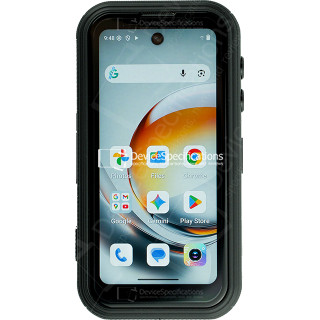
FOSSiBOT F116 Pro Review
Dimensions: 59.6 x 114.5 x 23 mm
Weight: 207 g
SoC: MediaTek Dimensity 7300 (MT6878)
CPU: 4x 2.5 GHz ARM Cortex-A78, 4x 2.0 GHz ARM Cortex-A55, Cores: 8
GPU: ARM Mali-G615 MC2
RAM: 12 GB, 2133 MHz
Storage: 256 GB
Display: 4 in, IPS, 540 x 1168 pixels, 24 bit
Battery: 3700 mAh, Li-Polymer
OS: Android 16
Camera: 8192 x 6144 pixels, 3840 x 2160 pixels, 30 fps

REDMAGIC 11 Air Review
Dimensions: 76.54 x 163.82 x 7.85 mm
Weight: 207 g
SoC: Qualcomm Snapdragon 8 Elite (SM8750-AB)
CPU: 2x 4.32 GHz, 6x 3.53 GHz, Cores: 8
GPU: Qualcomm Adreno 830, 1100 MHz
RAM: 12 GB, 16 GB, 4800 MHz
Storage: 256 GB, 512 GB
Display: 6.85 in, Q10 AMOLED, 1216 x 2688 pixels, 30 bit
Battery: 7000 mAh, Li-Polymer
OS: Red Magic OS 11.0 (Android 16)
Camera: 8182 x 6144 pixels, 7680 x 4320 pixels, 30 fps
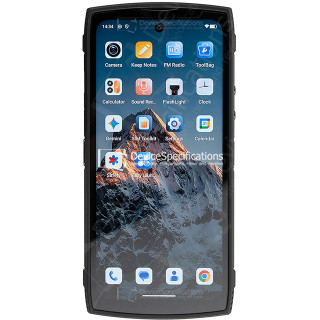
Lagenio Panther 2 Pro Review
Dimensions: 82 x 175.4 x 11.3 mm
Weight: 266 g
SoC: Unisoc T7250
CPU: 2x 1.8 GHz ARM Cortex-A75, 6x 1.6 GHz ARM Cortex-A55, Cores: 8
GPU: ARM Mali-G57 MP1, 850 MHz
RAM: 8 GB, 1866 MHz
Storage: 256 GB
Display: 6.7 in, IPS, 720 x 1600 pixels, 24 bit
Battery: 5150 mAh, Li-Polymer
OS: Android 15
Camera: 8160 x 6128 pixels, 1920 x 1080 pixels, 30 fps

Oukitel WP55 Pro Review
Dimensions: 81 x 172.2 x 15.3 mm
Weight: 360 g
SoC: MediaTek Dimensity 7025 (MT6855V)
CPU: 2x 2.5 GHz ARM Cortex-A78, 6x 2.0 GHz ARM Cortex-A55, Cores: 8
GPU: IMG BXM-8-256, 950 MHz
RAM: 16 GB, 3200 MHz
Storage: 512 GB
Display: 6.6 in, IPS, 1080 x 2408 pixels, 24 bit
Battery: 11000 mAh, Li-Polymer
OS: Android 15
Camera: 12000 x 9000 pixels, 2560 x 1440 pixels, 30 fps

FOSSiBOT F107 Pro Review
Dimensions: 90.6 x 190.1 x 39.95 mm
Weight: 910 g
SoC: MediaTek Dimensity 7300 (MT6878)
CPU: 4x 2.5 GHz ARM Cortex-A78, 4x 2.0 GHz ARM Cortex-A55, Cores: 8
GPU: ARM Mali-G615 MC2
RAM: 12 GB, 2133 MHz
Storage: 512 GB
Display: 6.95 in, IPS, 1080 x 2460 pixels, 24 bit
Battery: 28000 mAh, Li-Polymer
OS: Android 15
Camera: 16320 x 12288 pixels, 3840 x 2160 pixels, 30 fps

REDMAGIC 11 Pro Global Review
Dimensions: 76.54 x 163.82 x 8.9 mm
Weight: 230 g
SoC: Qualcomm Snapdragon 8 Elite Gen 5 (SM8850-AC)
CPU: 2x 4.61 GHz Oryon, 6x 3.63 GHz Oryon, Cores: 8
GPU: Qualcomm Adreno 840 (829), 768 MHz
RAM: 12 GB, 16 GB, 24 GB, 5333 MHz
Storage: 256 GB, 512 GB, 1024 GB
Display: 6.85 in, AMOLED, 1216 x 2688 pixels, 30 bit
Battery: 7500 mAh, Li-Polymer
OS: Red Magic OS 11 (Android 16)
Camera: 8182 x 6144 pixels, 7680 x 4320 pixels, 30 fps

Ulefone Armor Pad 5 Ultra Review
Dimensions: 269.7 x 179.5 x 27.8 mm
Weight: 1600 g
SoC: MediaTek Dimensity 7400X (MT6878V/TFZA)
CPU: 4x 2.6 GHz ARM Cortex-A78, 4x ARM Cortex-A55, Cores: 8
GPU: ARM Mali-G615 MC2
RAM: 12 GB, 2133 MHz
Storage: 512 GB
Display: 10.95 in, IPS, 1920 x 1200 pixels, 24 bit
Battery: 24200 mAh, Li-Polymer
OS: Android 15
Camera: 9280 x 6920 pixels, 3840 x 2160 pixels, 30 fps
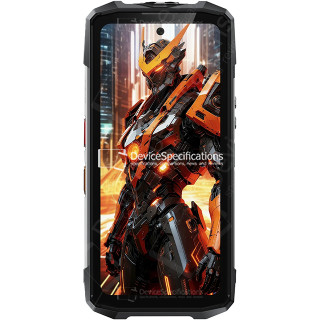
FOSSiBOT F113 Review
Dimensions: 89.2 x 186.2 x 31.6 mm
Weight: 699 g
SoC: MediaTek Dimensity 7050 (MT6877V)
CPU: 2x 2.6 GHz ARM Cortex-A78, 6x 2.0 GHz ARM Cortex-A55, Cores: 8
GPU: ARM Mali-G68 MC4, 950 MHz
RAM: 12 GB, 2133 MHz
Storage: 256 GB
Display: 6.78 in, IPS, 1080 x 2460 pixels, 24 bit
Battery: 20000 mAh, Li-Polymer
OS: Android 15
Camera: 8120 x 6180 pixels, 3840 x 2160 pixels, 30 fps