Samsung Galaxy S9+ Review
31 March 2018, 06:50:27

Primary camera
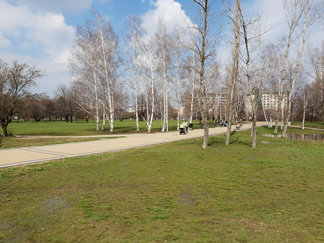
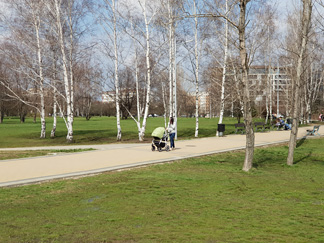
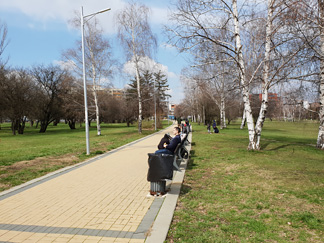
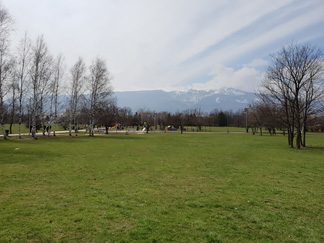
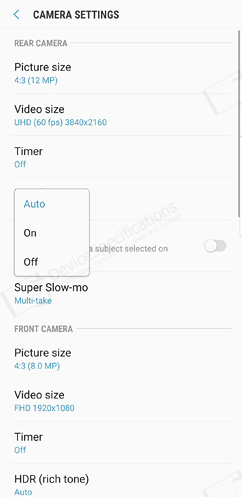
A large number of the new capabilities of modern smartphones are due to the enhanced hardware capabilities of the chipsets that empower them. The Exynos 9810 inside the Galaxy S9+ allows the usage of deep learning-based software. Based on this, the processor accurately identifies items or persons in the photos for fast image searching or categorization. It also makes possible to scan the user's face in 3D for face tracking filters as well as offers strong security when unlocking a device with one's face. The Exynos 9810 supports 4K UHD video recording and playback with a frame rate up to 120 fps. Furthermore, the advanced MFC (Multi-Format Codec) supports 10-bit HEVC and VP9 codecs that can render 1024 different tones for each primary colours (red, green and blue). Finally, the SoC features a dual-ISP (Image Signal Processor) - a high-performance and a power-efficient one that supports up to 4 image sensors. In addition, the AF statistics engine enables faster and more accurate phase-detection AF and improves various image processing algorithms, including face beautification. Аdvanced stabilization and real-time out-of-focus photography in high-resolution image and video of up to UHD resolution are supported as well.The Galaxy S9+ is the first smartphone from the Galaxy S series that gets two rear cameras. The first camera employs Samsung's newest ISOCELL image sensor - the Samsung SAK2L3. This is a 3-stack, 1/2.55", 12MP image sensor with a 1.4μm pixels size and an integrated DRAM layer that supports super-slow-motion video shooting at up to 960 fps, low-light shooting, real-time HDR imaging, 3-Dimensional Noise Reduction (3DNR). This sensor is coupled with a 77° wide-angle lens with variable aperture from f/1.5 to f/2.4. However, it shoots only with f/1.5 or f/2.4 - no other aperture options in between. The aperture can be set from the PRO mode. The second camera employs another 12MP sensor with a 1.0µm pixels size and a telephoto lens with an f/2.4 aperture. Every shooter supports Smart OIS, Object tracking AF, HDR and both are aided by the High CRI LED flash. The Dual Pixel technology is on board as well allowing each pixel to employ to photodiodes that respectively work as a phase detection auto-focus (PDAF) agent. This SuperSpeed Dual Pixel tech is available for each of the rear cameras. The rear module takes photos with a maximum resolution of 4032 x 3024 pixels and shoots the following types of videos: 4K at 30 fps, 2K at 60 fps, 1080p at 240 fps, and 720p super-slow-motion ones at 960 fps.
















Secondary camera
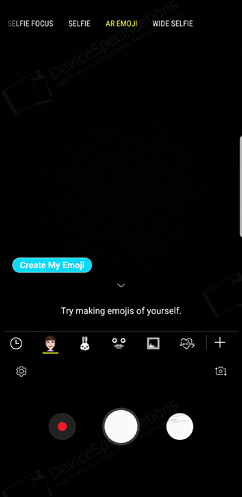
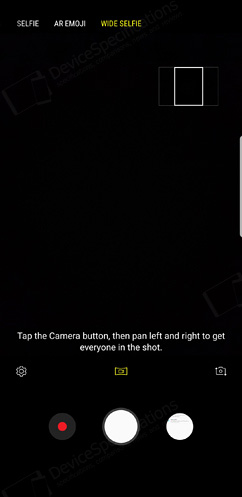
The front-facing camera is equipped with an 8-megapixel Samsung S5K3H1 1/3.6" image sensor from System LSI with a 1.22μm pixel size. It is coupled with an 80° wide-angle lens with f/1.7 aperture. The same hardware setup is used for the front-facing camera of the Galaxy S8/S8+ and the Galaxy S9. The selfie camera takes photos with a resolution of 3264 x 2448 pixels and shoots 2K videos at 30 fps. It supports Auto HDR, AR Emoji, Wide selfies and improved bokeh effect on portraits.
Camera App
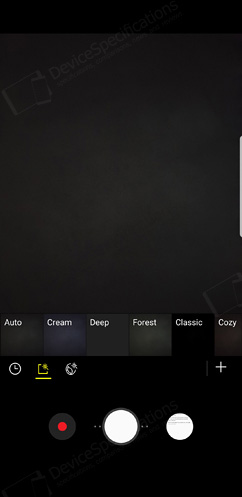
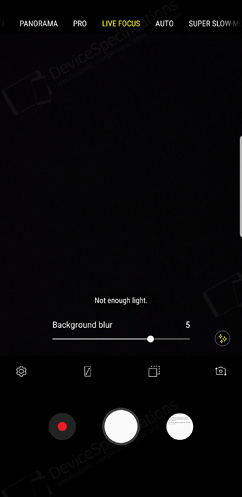
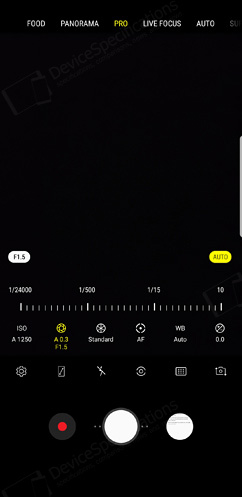
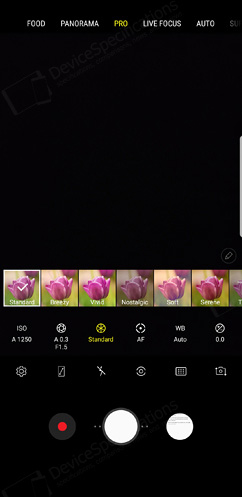
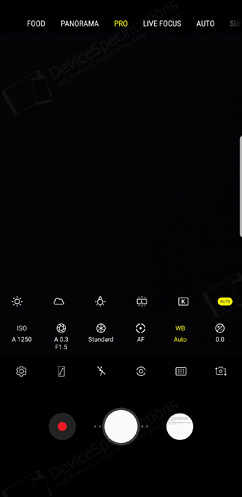
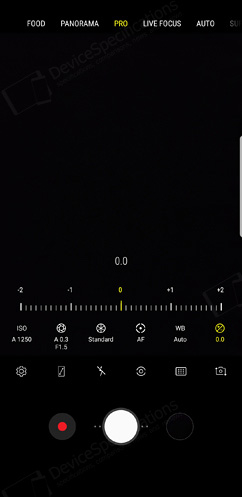
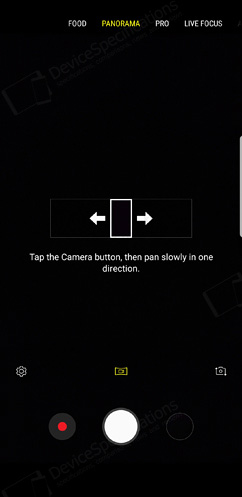
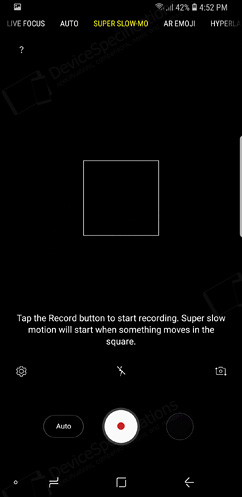
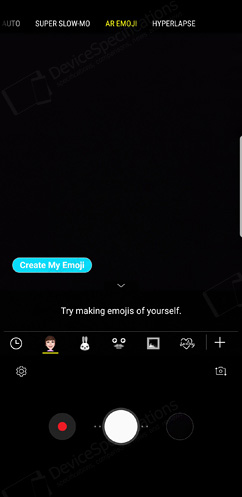
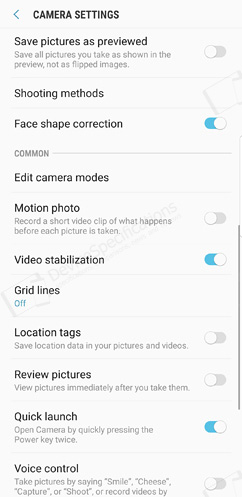
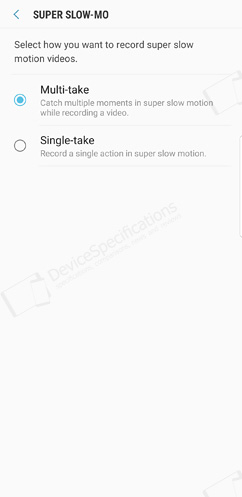
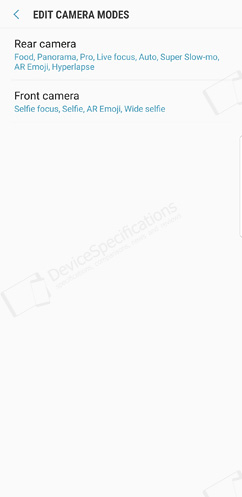
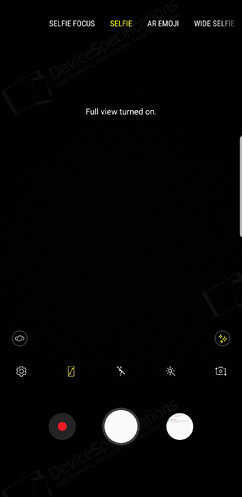
The Camera application is completely re-designed in order to serve the new camera capabilities better. The shutter button is placed in the centre of the button with the video recording button to its left and the shortcut to the list of photos to its right. Above them, there's a list of various shortcuts for quick settings such as the shortcut to the camera settings, full screen and flash options, a choice of filters and camera switch. Above this list, you will see the Bixby Vision button in the left and the icon designating the level of optical zoom (up to 2x), avaialble only on the S9+. At the top of the screen, the various shooting modes are listed and include the default Auto one, Super Slow-Mo, AR Emoji, Hyperlapse, PRO mode for adjusting the aperture (available only for the first camera), ISO, white balance, focus, exposure, shutter speed, filter, Panorama mode, and Food mode. When you touch the video recording button, the recording starts immediately. There is no Selective focus available on the Galaxy S9 but there is a Live Focus mode, which allows you to create a quality background blur and apply beautification effects if you're shooting portraits with it by adjusting the depth of field.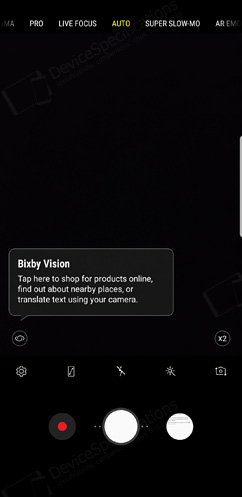




















Most recent reviews
A list of the most recent reviews of mobile devices made by us
Oukitel WP61 Plus Review
Dimensions: 85 x 179.5 x 27.5 mm
Weight: 651 g
SoC: MediaTek Dimensity 7025 (MT6855V)
CPU: 2x 2.5 GHz ARM Cortex-A78, 6x 2.0 GHz ARM Cortex-A55, Cores: 8
GPU: IMG BXM-8-256, 950 MHz
RAM: 12 GB, 3200 MHz
Storage: 512 GB
Display: 6.78 in, IPS, 1080 x 2460 pixels, 24 bit
Battery: 20000 mAh, Li-Polymer
OS: Android 16
Camera: 12000 x 9000 pixels, 2560 x 1440 pixels, 25 fps
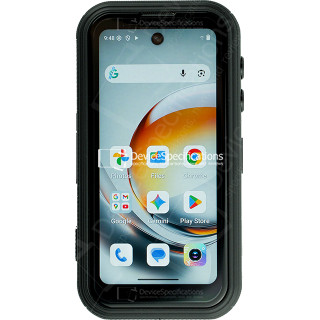
FOSSiBOT F116 Pro Review
Dimensions: 59.6 x 114.5 x 23 mm
Weight: 207 g
SoC: MediaTek Dimensity 7300 (MT6878)
CPU: 4x 2.5 GHz ARM Cortex-A78, 4x 2.0 GHz ARM Cortex-A55, Cores: 8
GPU: ARM Mali-G615 MC2
RAM: 12 GB, 2133 MHz
Storage: 256 GB
Display: 4 in, IPS, 540 x 1168 pixels, 24 bit
Battery: 3700 mAh, Li-Polymer
OS: Android 16
Camera: 8192 x 6144 pixels, 3840 x 2160 pixels, 30 fps

REDMAGIC 11 Air Review
Dimensions: 76.54 x 163.82 x 7.85 mm
Weight: 207 g
SoC: Qualcomm Snapdragon 8 Elite (SM8750-AB)
CPU: 2x 4.32 GHz, 6x 3.53 GHz, Cores: 8
GPU: Qualcomm Adreno 830, 1100 MHz
RAM: 12 GB, 16 GB, 4800 MHz
Storage: 256 GB, 512 GB
Display: 6.85 in, Q10 AMOLED, 1216 x 2688 pixels, 30 bit
Battery: 7000 mAh, Li-Polymer
OS: Red Magic OS 11.0 (Android 16)
Camera: 8182 x 6144 pixels, 7680 x 4320 pixels, 30 fps
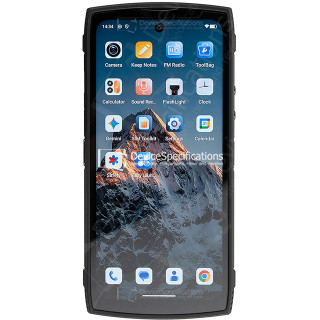
Lagenio Panther 2 Pro Review
Dimensions: 82 x 175.4 x 11.3 mm
Weight: 266 g
SoC: Unisoc T7250
CPU: 2x 1.8 GHz ARM Cortex-A75, 6x 1.6 GHz ARM Cortex-A55, Cores: 8
GPU: ARM Mali-G57 MP1, 850 MHz
RAM: 8 GB, 1866 MHz
Storage: 256 GB
Display: 6.7 in, IPS, 720 x 1600 pixels, 24 bit
Battery: 5150 mAh, Li-Polymer
OS: Android 15
Camera: 8160 x 6128 pixels, 1920 x 1080 pixels, 30 fps

Oukitel WP55 Pro Review
Dimensions: 81 x 172.2 x 15.3 mm
Weight: 360 g
SoC: MediaTek Dimensity 7025 (MT6855V)
CPU: 2x 2.5 GHz ARM Cortex-A78, 6x 2.0 GHz ARM Cortex-A55, Cores: 8
GPU: IMG BXM-8-256, 950 MHz
RAM: 16 GB, 3200 MHz
Storage: 512 GB
Display: 6.6 in, IPS, 1080 x 2408 pixels, 24 bit
Battery: 11000 mAh, Li-Polymer
OS: Android 15
Camera: 12000 x 9000 pixels, 2560 x 1440 pixels, 30 fps

FOSSiBOT F107 Pro Review
Dimensions: 90.6 x 190.1 x 39.95 mm
Weight: 910 g
SoC: MediaTek Dimensity 7300 (MT6878)
CPU: 4x 2.5 GHz ARM Cortex-A78, 4x 2.0 GHz ARM Cortex-A55, Cores: 8
GPU: ARM Mali-G615 MC2
RAM: 12 GB, 2133 MHz
Storage: 512 GB
Display: 6.95 in, IPS, 1080 x 2460 pixels, 24 bit
Battery: 28000 mAh, Li-Polymer
OS: Android 15
Camera: 16320 x 12288 pixels, 3840 x 2160 pixels, 30 fps

REDMAGIC 11 Pro Global Review
Dimensions: 76.54 x 163.82 x 8.9 mm
Weight: 230 g
SoC: Qualcomm Snapdragon 8 Elite Gen 5 (SM8850-AC)
CPU: 2x 4.61 GHz Oryon, 6x 3.63 GHz Oryon, Cores: 8
GPU: Qualcomm Adreno 840 (829), 768 MHz
RAM: 12 GB, 16 GB, 24 GB, 5333 MHz
Storage: 256 GB, 512 GB, 1024 GB
Display: 6.85 in, AMOLED, 1216 x 2688 pixels, 30 bit
Battery: 7500 mAh, Li-Polymer
OS: Red Magic OS 11 (Android 16)
Camera: 8182 x 6144 pixels, 7680 x 4320 pixels, 30 fps

Ulefone Armor Pad 5 Ultra Review
Dimensions: 269.7 x 179.5 x 27.8 mm
Weight: 1600 g
SoC: MediaTek Dimensity 7400X (MT6878V/TFZA)
CPU: 4x 2.6 GHz ARM Cortex-A78, 4x ARM Cortex-A55, Cores: 8
GPU: ARM Mali-G615 MC2
RAM: 12 GB, 2133 MHz
Storage: 512 GB
Display: 10.95 in, IPS, 1920 x 1200 pixels, 24 bit
Battery: 24200 mAh, Li-Polymer
OS: Android 15
Camera: 9280 x 6920 pixels, 3840 x 2160 pixels, 30 fps
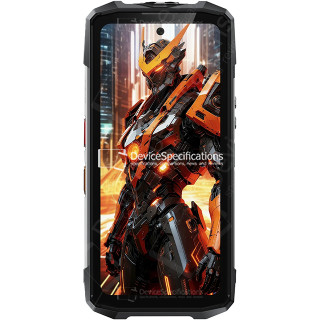
FOSSiBOT F113 Review
Dimensions: 89.2 x 186.2 x 31.6 mm
Weight: 699 g
SoC: MediaTek Dimensity 7050 (MT6877V)
CPU: 2x 2.6 GHz ARM Cortex-A78, 6x 2.0 GHz ARM Cortex-A55, Cores: 8
GPU: ARM Mali-G68 MC4, 950 MHz
RAM: 12 GB, 2133 MHz
Storage: 256 GB
Display: 6.78 in, IPS, 1080 x 2460 pixels, 24 bit
Battery: 20000 mAh, Li-Polymer
OS: Android 15
Camera: 8120 x 6180 pixels, 3840 x 2160 pixels, 30 fps