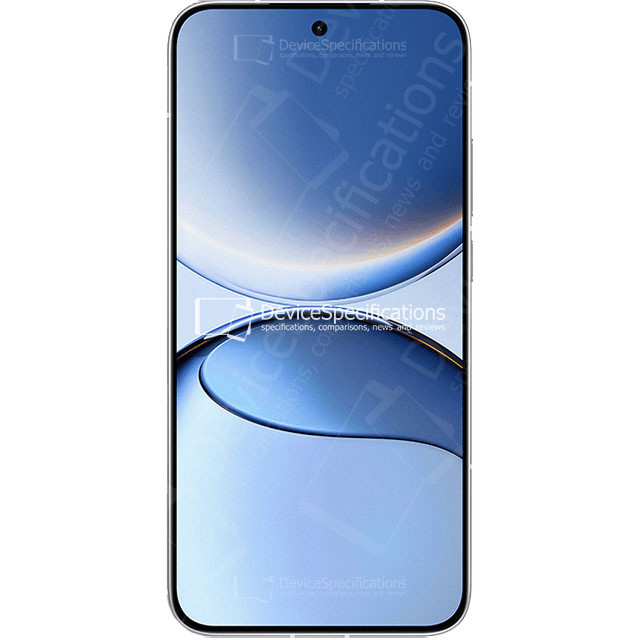
Xiaomi Mi MIX 3 Review
10 December 2018, 08:29:41

You can also check out the current discounts on top brand smartphones.
Display
Xiaomi Mi MIX 3 is built around a 6.39-inch AMOLED display. While this is not the first AMOLED screen on a Xiaomi smartphone, for sure it is the first one supplied from Samsung. Actually, when we compare it with the display of OnePlus 6T, it turns out they are quite close. The Mi MIX 3 has the same FHD+ resolution with 1080 x 2340 pixels and the same 19.5:9 aspect ratio. The front is protected by a 2.5D curved Corning Gorilla Glass of unspecified generation. Xiaomi specifies a 60000:1 static contrast for the screen and 103.8% coverage of the NTSC reference colour space. The typical brightness is 430 nits and the maximum - 600 nits. The Mi MIX 3 display offers a Night mode with customizable colour temperature and brightness, a customizable Reading mode, and HDR content support. Samsung AMOLED panels have a VDE (Verband der Elektrotechnik) certificate that they are safe for your eyes. The display of Mi MIX 3 is extremely responsive, easily readable under direct sunlight and offers perfect viewing angles with full preservation of brightness, contrast and colour. The Ambient display option allows you to activate and schedule the Always on Display.
Average Picture Level (APL)
Being a Samsung AMOLED display, it has a Diamond PenTile sub-pixel arrangement, in which the number of green subpixels (small and elongated) is the same as in a classic RGB stripe one, but the number of red subpixels (mid-size and diamond-shaped) and blue subpixels (large and diamond-shaped) is twice as less. Hence, the panel uses subpixel rendering to preserve the number of pixels as in classic RGB stripe displays with only 2/3rds of the number of dots. In theory, Active Matrix Organic LED (AMOLED) displays consume less power and provide faster pixel switching response times. By simply switching off the pixels needed to display the black colour, they are able to display "infinite black". They also have the ability to provide more power to each pixel with the decrease of the white area that has to be displayed on the screen. Therefore, when assessing OLED displays, one must take into account the Average Picture Level (APL) of such units. The APL graph below shows the brightness of the screen of our review unit in the default colour mode according to the percentage of the white area displayed on it compared to a full white display. We use ten APL values, respectively for a white area that takes up 10%, 20%, 30%, etc. till 100% of the display. At 10% APL, the peak brightness of our review unit is 590.908 cd/2 when the default display mode is on (default colour, automatic contrast). The peak brightness is achieved with the auto brightness and adaptive display mode on in intensive ambient light conditions - the same we do with the Samsung Galaxy S smartphones. Thus, our review unit almost completely reached the specified peak brightness of 600 nits - of course only at 10% APL. For example, the peak brightness of Samsung Galaxy S8+ at 10% APL reached 986 cd/m2 and the one of the Samsung Galaxy S9+ exceeded 1000 cd/m2 at 10% APL.
Nokia X6 | 434.918 cd/m2 |
Xiaomi Mi 8 | 434.324 cd/m2 |
Elephone S7 Special Edition | 433.436 cd/m2 |
Ulefone Armor 2 | 433.216 cd/m2 |
OnePlus 5T | 433.149 cd/m2 |
OnePlus 3 | 432.536 cd/m2 |
OnePlus 5 | 431.892 cd/m2 |
Cubot Note 9 | 431.193 cd/m2 |
OnePlus 6T | 431.037 cd/m2 |
Cubot Max 3 | 430.809 cd/m2 |
Xiaomi Mi Mix 3 | 430.777 cd/m2 |
Ulefone Power Armor 14 | 428.251 cd/m2 |
Oukitel WP30 Pro | 427.03 cd/m2 |
Doogee Mix 2 | 426.842 cd/m2 |
Meizu m3 note | 426.377 cd/m2 |
OnePlus 3T | 425.272 cd/m2 |
Xiaomi Redmi Note 4X | 424.655 cd/m2 |
Ulefone Armor 3 | 422.84 cd/m2 |
Cubot TAB 10 | 420.853 cd/m2 |
Ulefone Vienna | 420.3 cd/m2 |
Ulefone Armor 10 5G | 419.263 cd/m2 |
Standard colours, Automatic contrast
The "Standard colours, Automatic contrast" profile is the default one for the display of the Mi MIX 3. Under this profile, the maximum brightness of our review unit's screen measures 430.777 cd/m2 and the lowest white luminance (0% brightness level) is 0.955 cd/m2. The temperature of the white point is nailed at around 7500 K. The CIE diagram unveils a colour space coverage that is significantly wider than 100% sRGB.| Brightness | White luminance | Black luminance | Contrast | Color temperature |
|---|---|---|---|---|
| 100 % | 430.777 cd/m2 | 0.000 cd/m2 | - | 7607 K |
| 0 % | 0.955 cd/m2 | 0.000 cd/m2 | - | 7139 K |


Standard colours, Increased contrast
The second profile - "Standard colours, Increased contrast" - achieves the same maximum white luminance - 430.415 cd/m2. The temperature of the white points remains within the 7500 K range. The CIE diagram unveils a slightly larger colour space coverage than the one on the "Standard colours, Automatic contrast" display profile.| Brightness | White luminance | Black luminance | Contrast | Color temperature |
|---|---|---|---|---|
| 100 % | 430.415 cd/m2 | 0.000 cd/m2 | - | 7582 K |
| 0 % | 1.997 cd/m2 | 0.000 cd/m2 | - | 7165 K |


Standard colours, Standard contrast
The third display profile - "Standard colours, Standard contrast" - shows the same maximum brightness of 430.426 cd/m2 but a lower temperature of the white point - around 7000 K. The CIE diagram an almost 100% sRGB colour space coverage. So in case you want realistic colours and perfect colour temperature, you should go for this profile.| Brightness | White luminance | Black luminance | Contrast | Color temperature |
|---|---|---|---|---|
| 100 % | 430.426 cd/m2 | 0.000 cd/m2 | - | 6719 K |
| 0 % | 1.987 cd/m2 | 0.000 cd/m2 | - | 7219 K |


Most recent reviews
A list of the most recent reviews of mobile devices made by us
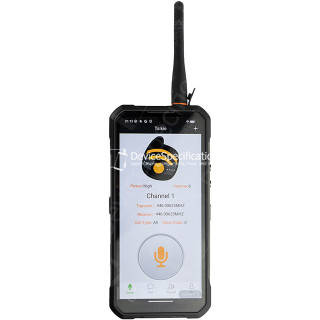
Oukitel WP61 Plus Review
Dimensions: 85 x 179.5 x 27.5 mm
Weight: 651 g
SoC: MediaTek Dimensity 7025 (MT6855V)
CPU: 2x 2.5 GHz ARM Cortex-A78, 6x 2.0 GHz ARM Cortex-A55, Cores: 8
GPU: IMG BXM-8-256, 950 MHz
RAM: 12 GB, 3200 MHz
Storage: 512 GB
Display: 6.78 in, IPS, 1080 x 2460 pixels, 24 bit
Battery: 20000 mAh, Li-Polymer
OS: Android 16
Camera: 12000 x 9000 pixels, 2560 x 1440 pixels, 25 fps
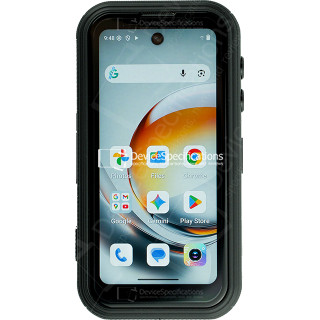
FOSSiBOT F116 Pro Review
Dimensions: 59.6 x 114.5 x 23 mm
Weight: 207 g
SoC: MediaTek Dimensity 7300 (MT6878)
CPU: 4x 2.5 GHz ARM Cortex-A78, 4x 2.0 GHz ARM Cortex-A55, Cores: 8
GPU: ARM Mali-G615 MC2
RAM: 12 GB, 2133 MHz
Storage: 256 GB
Display: 4 in, IPS, 540 x 1168 pixels, 24 bit
Battery: 3700 mAh, Li-Polymer
OS: Android 16
Camera: 8192 x 6144 pixels, 3840 x 2160 pixels, 30 fps

REDMAGIC 11 Air Review
Dimensions: 76.54 x 163.82 x 7.85 mm
Weight: 207 g
SoC: Qualcomm Snapdragon 8 Elite (SM8750-AB)
CPU: 2x 4.32 GHz, 6x 3.53 GHz, Cores: 8
GPU: Qualcomm Adreno 830, 1100 MHz
RAM: 12 GB, 16 GB, 4800 MHz
Storage: 256 GB, 512 GB
Display: 6.85 in, Q10 AMOLED, 1216 x 2688 pixels, 30 bit
Battery: 7000 mAh, Li-Polymer
OS: Red Magic OS 11.0 (Android 16)
Camera: 8182 x 6144 pixels, 7680 x 4320 pixels, 30 fps
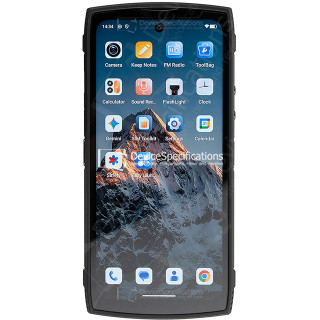
Lagenio Panther 2 Pro Review
Dimensions: 82 x 175.4 x 11.3 mm
Weight: 266 g
SoC: Unisoc T7250
CPU: 2x 1.8 GHz ARM Cortex-A75, 6x 1.6 GHz ARM Cortex-A55, Cores: 8
GPU: ARM Mali-G57 MP1, 850 MHz
RAM: 8 GB, 1866 MHz
Storage: 256 GB
Display: 6.7 in, IPS, 720 x 1600 pixels, 24 bit
Battery: 5150 mAh, Li-Polymer
OS: Android 15
Camera: 8160 x 6128 pixels, 1920 x 1080 pixels, 30 fps

Oukitel WP55 Pro Review
Dimensions: 81 x 172.2 x 15.3 mm
Weight: 360 g
SoC: MediaTek Dimensity 7025 (MT6855V)
CPU: 2x 2.5 GHz ARM Cortex-A78, 6x 2.0 GHz ARM Cortex-A55, Cores: 8
GPU: IMG BXM-8-256, 950 MHz
RAM: 16 GB, 3200 MHz
Storage: 512 GB
Display: 6.6 in, IPS, 1080 x 2408 pixels, 24 bit
Battery: 11000 mAh, Li-Polymer
OS: Android 15
Camera: 12000 x 9000 pixels, 2560 x 1440 pixels, 30 fps

FOSSiBOT F107 Pro Review
Dimensions: 90.6 x 190.1 x 39.95 mm
Weight: 910 g
SoC: MediaTek Dimensity 7300 (MT6878)
CPU: 4x 2.5 GHz ARM Cortex-A78, 4x 2.0 GHz ARM Cortex-A55, Cores: 8
GPU: ARM Mali-G615 MC2
RAM: 12 GB, 2133 MHz
Storage: 512 GB
Display: 6.95 in, IPS, 1080 x 2460 pixels, 24 bit
Battery: 28000 mAh, Li-Polymer
OS: Android 15
Camera: 16320 x 12288 pixels, 3840 x 2160 pixels, 30 fps

REDMAGIC 11 Pro Global Review
Dimensions: 76.54 x 163.82 x 8.9 mm
Weight: 230 g
SoC: Qualcomm Snapdragon 8 Elite Gen 5 (SM8850-AC)
CPU: 2x 4.61 GHz Oryon, 6x 3.63 GHz Oryon, Cores: 8
GPU: Qualcomm Adreno 840 (829), 768 MHz
RAM: 12 GB, 16 GB, 24 GB, 5333 MHz
Storage: 256 GB, 512 GB, 1024 GB
Display: 6.85 in, AMOLED, 1216 x 2688 pixels, 30 bit
Battery: 7500 mAh, Li-Polymer
OS: Red Magic OS 11 (Android 16)
Camera: 8182 x 6144 pixels, 7680 x 4320 pixels, 30 fps

Ulefone Armor Pad 5 Ultra Review
Dimensions: 269.7 x 179.5 x 27.8 mm
Weight: 1600 g
SoC: MediaTek Dimensity 7400X (MT6878V/TFZA)
CPU: 4x 2.6 GHz ARM Cortex-A78, 4x ARM Cortex-A55, Cores: 8
GPU: ARM Mali-G615 MC2
RAM: 12 GB, 2133 MHz
Storage: 512 GB
Display: 10.95 in, IPS, 1920 x 1200 pixels, 24 bit
Battery: 24200 mAh, Li-Polymer
OS: Android 15
Camera: 9280 x 6920 pixels, 3840 x 2160 pixels, 30 fps
FOSSiBOT F113 Review
Dimensions: 89.2 x 186.2 x 31.6 mm
Weight: 699 g
SoC: MediaTek Dimensity 7050 (MT6877V)
CPU: 2x 2.6 GHz ARM Cortex-A78, 6x 2.0 GHz ARM Cortex-A55, Cores: 8
GPU: ARM Mali-G68 MC4, 950 MHz
RAM: 12 GB, 2133 MHz
Storage: 256 GB
Display: 6.78 in, IPS, 1080 x 2460 pixels, 24 bit
Battery: 20000 mAh, Li-Polymer
OS: Android 15
Camera: 8120 x 6180 pixels, 3840 x 2160 pixels, 30 fps