OnePlus 6T Review
10 November 2018, 13:31:08

Display
OnePlus 6T evolves around a 6.41-inch Optic AMOLED display, which is larger than the one on the OnePlus 6. It also offers more pixels in height as its exact FHD+ resolution is 1080 x 2340 pixels and a higher aspect ratio - 19.5:9. In addition, the screen-to-body ratio has been improved by more than 3% and the display of the 6T covers 85.9% of the total front surface of the handset. The front is protected by a 2.5D curved Corning Gorilla Glass 6. Everything else is the same. The AMOLED panel is sourced out from Samsung and has a Diamond PenTile sub-pixel arrangement as usual. In this type of sub-pixel architecture, the number of green subpixels (small and elongated) is the same as in a classic RGB stripe one, but the number of red subpixels (mid-size and diamond-shaped) and blue subpixels (large and diamond-shaped) is twice as less. Hence, the panel uses subpixel rendering to preserve the number of pixels as in classic RGB stripe displays with only 2/3rds of the number of dots. The display of OnePlus 6T is extremely responsive, easily readable under direct sunlight despite the not-so-high peak brightness and offers perfect viewing angles with full preservation of brightness, contrast and colour. The word "Optic" in front of AMOLED designates the custom-engineered gamma corrections OnePlus has made on the display panel to achieve a more natural colour look. OnePlus also offers a large choice of colour modes to suit your preferences - Default, sRGB, DCI-P3, Adaptive and Custom. The latter appeared for the first time in 1+6 and allows you to manually adjust the colour temperature. Ever since the OnePlus 5, there has been a DCI-P3 mode and since the 5T there has been an Adaptive mode as well. All five display modes are present on the OnePlus 6T, so you can adjust the screen to your liking. The Display menu contains a Night Mode and a Reading Mode, which reduce the strain on the eyes. Actually, Samsung AMOLED panels have a VDE (Verband der Elektrotechnik) certificate that they are safe for your eyes. The ambient display option allows you to enjoy a crisp screen under direct sunlight and there's an option for hiding the notch either. Below you can see the measurements of the white and black luminance, colour temperature as well as CIE diagrams, etc. of four of the available colour modes - Default, sRGB, DCI-P3, and Adaptive. But before that, let's check out the peak brightness of the model on the following APL table.
Average Picture Level (APL)
In theory, Active Matrix Organic LED (AMOLED) displays consume less power and provide faster pixel switching response times. By simply switching off the pixels needed to display the black colour, they are able to display "infinite black". They also have the ability to provide more power to each pixel with the decrease of the white area that has to be displayed on the screen. Therefore, when assessing OLED displays, one must take into account the Average Picture Level (APL) of such units. The APL graph below shows the brightness of the screen of our review unit in the default colour mode according to the percentage of the white area displayed on it compared to a full white display. We use ten APL values, respectively for a white area that takes up 10%, 20%, 30%, etc. till 100% of the display. At 10% APL, the peak brightness of our review unit is 549.745 cd/2 when the default display mode is on. The peak brightness is achieved with the auto brightness and adaptive display mode on in intensive ambient light conditions - the same we do with the Samsung Galaxy S smartphones. However, the peak brightness on the 1+6T did not manage to reach the one mentioned during the official 1+ event in New York, which was 600 cd/m2. Not even at 10% APL. For example, the peak brightness of Samsung Galaxy S8+ at 10% APL reached 986 cd/m2 and the one of the Samsung Galaxy S9+ exceeded 1000 cd/m2 at 10% APL.
Coolpad Cool1 | 436.112 cd/m2 |
Ulefone Armor 8 | 435.323 cd/m2 |
Nokia X6 | 434.918 cd/m2 |
Xiaomi Mi 8 | 434.324 cd/m2 |
Elephone S7 Special Edition | 433.436 cd/m2 |
Ulefone Armor 2 | 433.216 cd/m2 |
OnePlus 5T | 433.149 cd/m2 |
OnePlus 3 | 432.536 cd/m2 |
OnePlus 5 | 431.892 cd/m2 |
Cubot Note 9 | 431.193 cd/m2 |
OnePlus 6T | 431.037 cd/m2 |
Cubot Max 3 | 430.809 cd/m2 |
Xiaomi Mi Mix 3 | 430.777 cd/m2 |
Ulefone Power Armor 14 | 428.251 cd/m2 |
Oukitel WP30 Pro | 427.03 cd/m2 |
Doogee Mix 2 | 426.842 cd/m2 |
Meizu m3 note | 426.377 cd/m2 |
OnePlus 3T | 425.272 cd/m2 |
Xiaomi Redmi Note 4X | 424.655 cd/m2 |
Ulefone Armor 3 | 422.84 cd/m2 |
Cubot TAB 10 | 420.853 cd/m2 |
Default colour mode
In the default colour mode, the OnePlus 6T shows a peak brightness of 431 cd/m2, which is a bit lower than that of the OnePlus 6 (439 cd/m2) at 100% brightness. The temperature of the white point is slightly higher than the one of the previous model - 8200 K. The CIE diagram clearly demonstrates that colours look largely saturated in this mode and the covered colour space is wider than that of the Adobe RGB one.| Brightness | White luminance | Black luminance | Contrast | Color temperature |
|---|---|---|---|---|
| 100 % | 431.037 cd/m2 | 0.000 cd/m2 | - | 8143 K |
| 75 % | 319.920 cd/m2 | 0.000 cd/m2 | - | 8145 K |
| 50 % | 210.507 cd/m2 | 0.000 cd/m2 | - | 8156 K |
| 25 % | 102.915 cd/m2 | 0.000 cd/m2 | - | 8273 K |
| 0 % | 1.921 cd/m2 | 0.000 cd/m2 | - | 8239 K |


sRGB colour mode
The sRGB mode for the display is factory calibrated to cover 100% of the sRGB colour space and offer accurate colour reproduction. In this mode, the display demonstrates a slightly higher luminance at all brightness levels compared to the default mode. The temperature of the white point is slightly higher than the one on the 1+6 under the same colour mode - 6700-7000 K. The CIE diagram shows an almost perfect sRGB colour space match.| Brightness | White luminance | Black luminance | Contrast | Color temperature |
|---|---|---|---|---|
| 100 % | 429.802 cd/m2 | 0.000 cd/m2 | - | 6749 K |
| 75 % | 315.853 cd/m2 | 0.000 cd/m2 | - | 6761 K |
| 50 % | 207.666 cd/m2 | 0.000 cd/m2 | - | 6833 K |
| 25 % | 100.646 cd/m2 | 0.000 cd/m2 | - | 6947 K |
| 0 % | 1.854 cd/m2 | 0.000 cd/m2 | - | 7036 K |


DCI-P3 colour mode
The DCI-P3 colour space is created to serve the needs of the film industry mainly. It has gained popularity among smartphone displays after the creation of the UHD Alliance and its Ultra HD Premium certification. A display can get this if it covers 90% of the DCI-P3 colour gamut (Samsung Galaxy S8/S8+, Galaxy S9 and Galaxy S9+ displays have the HDR Premium certification), have a 60 pixels/degree resolution, .0005-550 nits dynamic range, and a 10-bit display panel. Our measurements of the OnePlus 6T display show that the absolute values of the white luminance are marginally lower than those on the default mode and almost the same as the ones on the sRGB mode. The same has been observed on the display of the 1+6, however, the screen of the 6T is a bit less bright (not that one would notice with a naked eye) and has higher colour temperature levels. The temperature of the white point in this mode varies from 6800 to 7000 K - again higher compared to the same mode on the 1+6. The colour coverage is significantly wider than 100% of sRGB but not as wide as the colour coverage under the default mode.| Brightness | White luminance | Black luminance | Contrast | Color temperature |
|---|---|---|---|---|
| 100 % | 428.886 cd/m2 | 0.000 cd/m2 | - | 6774 K |
| 75 % | 316.115 cd/m2 | 0.000 cd/m2 | - | 6765 K |
| 50 % | 206.934 cd/m2 | 0.000 cd/m2 | - | 6855 K |
| 25 % | 100.434 cd/m2 | 0.000 cd/m2 | - | 6958 K |
| 0 % | 1.852 cd/m2 | 0.000 cd/m2 | - | 7042 K |


Adaptive colour mode
The Adaptive colour mode actively changes the display in order for you to see the right colours no matter the setting you're in. The measurements are taken indoors. As a result, this mode shows the lowest luminance and highest temperature of the white point compared to the previous three modes. The colour space coverage is almost as wide as the one of the default mode but is more limited than it in the green-red area. Compared to the results of OnePlus 6, the 6T has slightly lower values of the white luminance at all brightness levels and a higher temperature of the white point, which in this mode is in the 7700-7800 K range.| Brightness | White luminance | Black luminance | Contrast | Color temperature |
|---|---|---|---|---|
| 100 % | 423.741 cd/m2 | 0.000 cd/m2 | - | 7690 K |
| 75 % | 313.776 cd/m2 | 0.000 cd/m2 | - | 7633 K |
| 50 % | 206.160 cd/m2 | 0.000 cd/m2 | - | 7698 K |
| 25 % | 100.417 cd/m2 | 0.000 cd/m2 | - | 7861 K |
| 0 % | 1.860 cd/m2 | 0.000 cd/m2 | - | 7886 K |


Most recent reviews
A list of the most recent reviews of mobile devices made by us
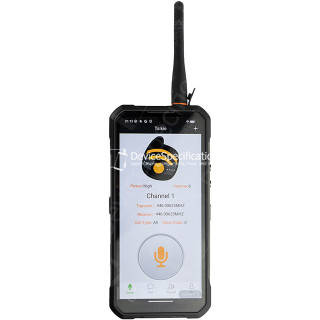
Oukitel WP61 Plus Review
Dimensions: 85 x 179.5 x 27.5 mm
Weight: 651 g
SoC: MediaTek Dimensity 7025 (MT6855V)
CPU: 2x 2.5 GHz ARM Cortex-A78, 6x 2.0 GHz ARM Cortex-A55, Cores: 8
GPU: IMG BXM-8-256, 950 MHz
RAM: 12 GB, 3200 MHz
Storage: 512 GB
Display: 6.78 in, IPS, 1080 x 2460 pixels, 24 bit
Battery: 20000 mAh, Li-Polymer
OS: Android 16
Camera: 12000 x 9000 pixels, 2560 x 1440 pixels, 25 fps
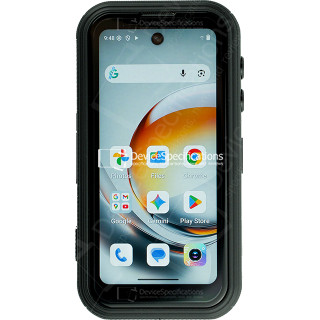
FOSSiBOT F116 Pro Review
Dimensions: 59.6 x 114.5 x 23 mm
Weight: 207 g
SoC: MediaTek Dimensity 7300 (MT6878)
CPU: 4x 2.5 GHz ARM Cortex-A78, 4x 2.0 GHz ARM Cortex-A55, Cores: 8
GPU: ARM Mali-G615 MC2
RAM: 12 GB, 2133 MHz
Storage: 256 GB
Display: 4 in, IPS, 540 x 1168 pixels, 24 bit
Battery: 3700 mAh, Li-Polymer
OS: Android 16
Camera: 8192 x 6144 pixels, 3840 x 2160 pixels, 30 fps

REDMAGIC 11 Air Review
Dimensions: 76.54 x 163.82 x 7.85 mm
Weight: 207 g
SoC: Qualcomm Snapdragon 8 Elite (SM8750-AB)
CPU: 2x 4.32 GHz, 6x 3.53 GHz, Cores: 8
GPU: Qualcomm Adreno 830, 1100 MHz
RAM: 12 GB, 16 GB, 4800 MHz
Storage: 256 GB, 512 GB
Display: 6.85 in, Q10 AMOLED, 1216 x 2688 pixels, 30 bit
Battery: 7000 mAh, Li-Polymer
OS: Red Magic OS 11.0 (Android 16)
Camera: 8182 x 6144 pixels, 7680 x 4320 pixels, 30 fps
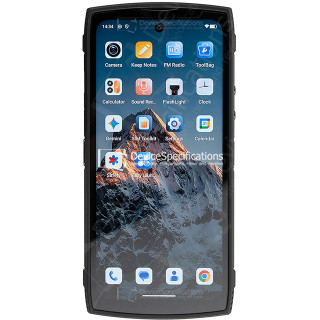
Lagenio Panther 2 Pro Review
Dimensions: 82 x 175.4 x 11.3 mm
Weight: 266 g
SoC: Unisoc T7250
CPU: 2x 1.8 GHz ARM Cortex-A75, 6x 1.6 GHz ARM Cortex-A55, Cores: 8
GPU: ARM Mali-G57 MP1, 850 MHz
RAM: 8 GB, 1866 MHz
Storage: 256 GB
Display: 6.7 in, IPS, 720 x 1600 pixels, 24 bit
Battery: 5150 mAh, Li-Polymer
OS: Android 15
Camera: 8160 x 6128 pixels, 1920 x 1080 pixels, 30 fps

Oukitel WP55 Pro Review
Dimensions: 81 x 172.2 x 15.3 mm
Weight: 360 g
SoC: MediaTek Dimensity 7025 (MT6855V)
CPU: 2x 2.5 GHz ARM Cortex-A78, 6x 2.0 GHz ARM Cortex-A55, Cores: 8
GPU: IMG BXM-8-256, 950 MHz
RAM: 16 GB, 3200 MHz
Storage: 512 GB
Display: 6.6 in, IPS, 1080 x 2408 pixels, 24 bit
Battery: 11000 mAh, Li-Polymer
OS: Android 15
Camera: 12000 x 9000 pixels, 2560 x 1440 pixels, 30 fps

FOSSiBOT F107 Pro Review
Dimensions: 90.6 x 190.1 x 39.95 mm
Weight: 910 g
SoC: MediaTek Dimensity 7300 (MT6878)
CPU: 4x 2.5 GHz ARM Cortex-A78, 4x 2.0 GHz ARM Cortex-A55, Cores: 8
GPU: ARM Mali-G615 MC2
RAM: 12 GB, 2133 MHz
Storage: 512 GB
Display: 6.95 in, IPS, 1080 x 2460 pixels, 24 bit
Battery: 28000 mAh, Li-Polymer
OS: Android 15
Camera: 16320 x 12288 pixels, 3840 x 2160 pixels, 30 fps

REDMAGIC 11 Pro Global Review
Dimensions: 76.54 x 163.82 x 8.9 mm
Weight: 230 g
SoC: Qualcomm Snapdragon 8 Elite Gen 5 (SM8850-AC)
CPU: 2x 4.61 GHz Oryon, 6x 3.63 GHz Oryon, Cores: 8
GPU: Qualcomm Adreno 840 (829), 768 MHz
RAM: 12 GB, 16 GB, 24 GB, 5333 MHz
Storage: 256 GB, 512 GB, 1024 GB
Display: 6.85 in, AMOLED, 1216 x 2688 pixels, 30 bit
Battery: 7500 mAh, Li-Polymer
OS: Red Magic OS 11 (Android 16)
Camera: 8182 x 6144 pixels, 7680 x 4320 pixels, 30 fps

Ulefone Armor Pad 5 Ultra Review
Dimensions: 269.7 x 179.5 x 27.8 mm
Weight: 1600 g
SoC: MediaTek Dimensity 7400X (MT6878V/TFZA)
CPU: 4x 2.6 GHz ARM Cortex-A78, 4x ARM Cortex-A55, Cores: 8
GPU: ARM Mali-G615 MC2
RAM: 12 GB, 2133 MHz
Storage: 512 GB
Display: 10.95 in, IPS, 1920 x 1200 pixels, 24 bit
Battery: 24200 mAh, Li-Polymer
OS: Android 15
Camera: 9280 x 6920 pixels, 3840 x 2160 pixels, 30 fps
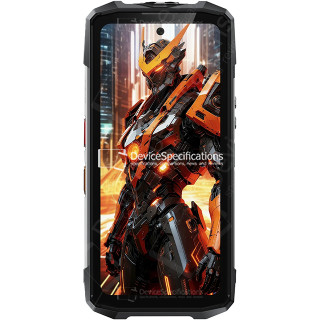
FOSSiBOT F113 Review
Dimensions: 89.2 x 186.2 x 31.6 mm
Weight: 699 g
SoC: MediaTek Dimensity 7050 (MT6877V)
CPU: 2x 2.6 GHz ARM Cortex-A78, 6x 2.0 GHz ARM Cortex-A55, Cores: 8
GPU: ARM Mali-G68 MC4, 950 MHz
RAM: 12 GB, 2133 MHz
Storage: 256 GB
Display: 6.78 in, IPS, 1080 x 2460 pixels, 24 bit
Battery: 20000 mAh, Li-Polymer
OS: Android 15
Camera: 8120 x 6180 pixels, 3840 x 2160 pixels, 30 fps