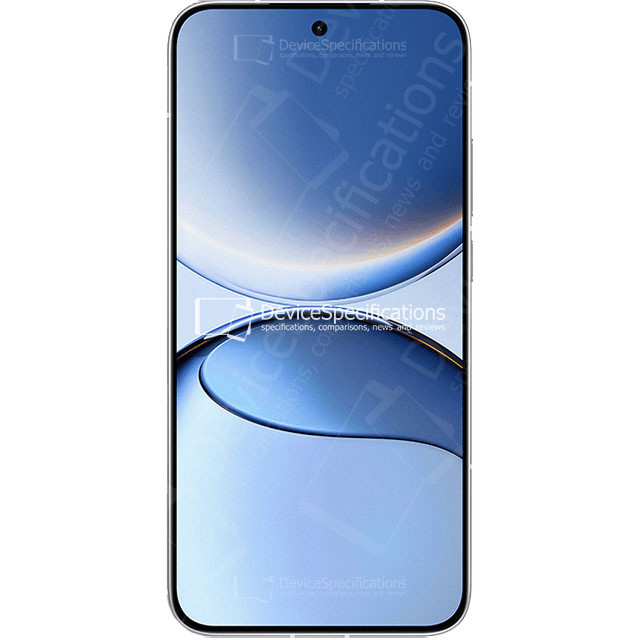
Xiaomi Mi MIX 3 Review
10 December 2018, 08:29:41

You can also check out the current discounts on top brand smartphones.
Primary camera photo and video samples
Xiaomi Mi MIX 3 has the same dual rear camera modules as the Mi MIX 2S but has improved its software backup and AI processing. The camera has received 108 points from DxOMark for taking photos and an overall score of 103 points. The primary shooter on the back uses the same 12MP Sony Sony IMX363 Exmor RS sensor found on the Mi MIX 2S. It has a 1/2.55" optical format and a 1.4 μm pixel size. The sensor is combined with an f/1.8 lens. The camera is aided by a dual-monochrome LED flash, Phase detection with Dual Pixel, EIS for videos and a 4-axis OIS (optical image stabilisation), which achieves image stability via the accelerometer and gyroscope built in the device and providing a high-speed detection of 8 directions of jitter with a real-time drive micro motor. In reality, the OIS works excellently. The main camera takes photos with a resolution of 4032 x 3024 pixels and is capable of shooting FHD and 4K videos at 30 fps and 60 fps, time-lapse videos, and slow-motion ones - up to 1080p at 960fps. However, the 960 fps shooting uses interpolation. Just like Huawei on the P20 Pro, Xiaomi uses interpolation to offer 960 fps shooting. As a result, the video is not of high quality as the one on the Samsung Galaxy S9 and Samsung Galaxy S9+ which offer real 960 fps slow-motion video recording. The Huawei and Xiaomi smartphones are not able to shoot real 960 fps slow-motion videos simply because their image sensors lack the DRAM die needed to temporarily store the huge number of frames before transferring them to the image buffer and writing them to the storage at the end. Other smartphones that use this sensor for their main cameras are the Doogee S80, Doogee S70, Xiaomi Mi 8, Xiaomi Mi MIX 2S, Xiaomi Mi 8 Lite. The second rear camera employs a telephoto lens with an f/2.4 aperture and a 12MP Samsung S5K3M3+ ISOCELL sensor with a 1/3.4" size and a 1.0 μm pixel size. There's no OIS for that shooter. The camera supports up to 2x optical zoom and up to 8x digital zoom. The Samsung S5K3M3 sensor is used by the second rear camera on the Mi 6, Mi Note 3, Mi MIX 2S, Mi 8.


Secondary camera photo samples
Xiaomi Mi MIX 3 is the first model from the MIX series to have two front cameras. This is a serious upgrade over the previous Mi MIX models. The main shooter employs a 24.8MP Sony IMX576 Exmor RS sensor and an f/2.2 lens. The same setup has been used on Mi 8 Lite in what Xiaomi called Class 12 AI Selfie Scene Camera. The sensor has a 1.8 μm pixels size and uses 4-in-1 pixel binning. In professional cameras, the pixel binning, pixel skipping and overlapping technologies are not perceived as good practices. However, in mobile photography, it has become very modern to use pixel binning. This is the simplest way to combine the colour information from neighbouring pixels. Xiaomi and other manufacturers refer to it as the creation of a 4-in-1 Super Pixel. The camera shoots photos with a resolution of 5760 x 4312 pixels and 1080p videos at 30 fps. The main front camera supports automatic HDR, front screen fill light, facial recognition, front video beauty, AI for portraits, scene recognition, beautifications, video real-time blue. The auxiliary front camera is equipped with a 2MP OmniVision OV02A10 sensor with a 1.75 μm pixel size.


Camera app
Xiaomi continues streamlining its Camera app, hence in MIUI 10 there are no major visible redesigns but minor changes that improve workflow. The main screen contains a circular shutter button at the bottom's centre. To its left, there's a shortcut to the list of photos and videos and to its right, there's the camera switch. Above those buttons, you will see the list of shooting modes - Photo, Portrait, Video, Slow Motion, Short Video, Square, Panorama, Manual. With the Mi MIX 3, Xiaomi introduces the Night mode. With this mode on, you can shoot good at night or in low-light environments without using a tripod and still get good shots. The Portrait mode is enhanced by adding various Studio Light effects. Of course, you can choose not to use such. The Manual mode allows you to adjust the white balance, ISO, shutter speed and switch between the wide and telephoto camera. The zoom level icon appears above the list of modes and allows you up to 8x digital zoom. The top of the screen is occupied by the flash and HDR options, AI on/off button, filters icon and a hamburger menu that opens additional options depending on the type of shooting modes and a shortcut to the camera settings. AI works on scene detection and photo optimization accordingly and on beautification. The AI Detection option, which appeared on MIUI 9.6, has disappeared on MIUI 10. This is Xiaomi's equivalent to Google Lens.


Most recent reviews
A list of the most recent reviews of mobile devices made by us
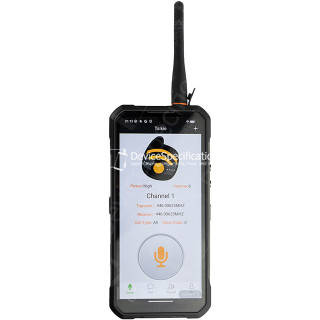
Oukitel WP61 Plus Review
Dimensions: 85 x 179.5 x 27.5 mm
Weight: 651 g
SoC: MediaTek Dimensity 7025 (MT6855V)
CPU: 2x 2.5 GHz ARM Cortex-A78, 6x 2.0 GHz ARM Cortex-A55, Cores: 8
GPU: IMG BXM-8-256, 950 MHz
RAM: 12 GB, 3200 MHz
Storage: 512 GB
Display: 6.78 in, IPS, 1080 x 2460 pixels, 24 bit
Battery: 20000 mAh, Li-Polymer
OS: Android 16
Camera: 12000 x 9000 pixels, 2560 x 1440 pixels, 25 fps
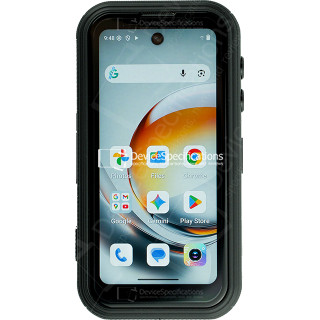
FOSSiBOT F116 Pro Review
Dimensions: 59.6 x 114.5 x 23 mm
Weight: 207 g
SoC: MediaTek Dimensity 7300 (MT6878)
CPU: 4x 2.5 GHz ARM Cortex-A78, 4x 2.0 GHz ARM Cortex-A55, Cores: 8
GPU: ARM Mali-G615 MC2
RAM: 12 GB, 2133 MHz
Storage: 256 GB
Display: 4 in, IPS, 540 x 1168 pixels, 24 bit
Battery: 3700 mAh, Li-Polymer
OS: Android 16
Camera: 8192 x 6144 pixels, 3840 x 2160 pixels, 30 fps

REDMAGIC 11 Air Review
Dimensions: 76.54 x 163.82 x 7.85 mm
Weight: 207 g
SoC: Qualcomm Snapdragon 8 Elite (SM8750-AB)
CPU: 2x 4.32 GHz, 6x 3.53 GHz, Cores: 8
GPU: Qualcomm Adreno 830, 1100 MHz
RAM: 12 GB, 16 GB, 4800 MHz
Storage: 256 GB, 512 GB
Display: 6.85 in, Q10 AMOLED, 1216 x 2688 pixels, 30 bit
Battery: 7000 mAh, Li-Polymer
OS: Red Magic OS 11.0 (Android 16)
Camera: 8182 x 6144 pixels, 7680 x 4320 pixels, 30 fps
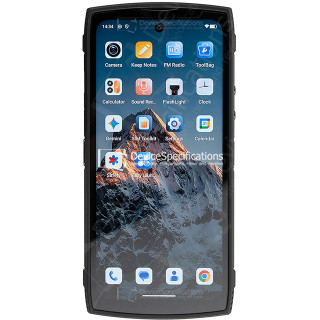
Lagenio Panther 2 Pro Review
Dimensions: 82 x 175.4 x 11.3 mm
Weight: 266 g
SoC: Unisoc T7250
CPU: 2x 1.8 GHz ARM Cortex-A75, 6x 1.6 GHz ARM Cortex-A55, Cores: 8
GPU: ARM Mali-G57 MP1, 850 MHz
RAM: 8 GB, 1866 MHz
Storage: 256 GB
Display: 6.7 in, IPS, 720 x 1600 pixels, 24 bit
Battery: 5150 mAh, Li-Polymer
OS: Android 15
Camera: 8160 x 6128 pixels, 1920 x 1080 pixels, 30 fps

Oukitel WP55 Pro Review
Dimensions: 81 x 172.2 x 15.3 mm
Weight: 360 g
SoC: MediaTek Dimensity 7025 (MT6855V)
CPU: 2x 2.5 GHz ARM Cortex-A78, 6x 2.0 GHz ARM Cortex-A55, Cores: 8
GPU: IMG BXM-8-256, 950 MHz
RAM: 16 GB, 3200 MHz
Storage: 512 GB
Display: 6.6 in, IPS, 1080 x 2408 pixels, 24 bit
Battery: 11000 mAh, Li-Polymer
OS: Android 15
Camera: 12000 x 9000 pixels, 2560 x 1440 pixels, 30 fps

FOSSiBOT F107 Pro Review
Dimensions: 90.6 x 190.1 x 39.95 mm
Weight: 910 g
SoC: MediaTek Dimensity 7300 (MT6878)
CPU: 4x 2.5 GHz ARM Cortex-A78, 4x 2.0 GHz ARM Cortex-A55, Cores: 8
GPU: ARM Mali-G615 MC2
RAM: 12 GB, 2133 MHz
Storage: 512 GB
Display: 6.95 in, IPS, 1080 x 2460 pixels, 24 bit
Battery: 28000 mAh, Li-Polymer
OS: Android 15
Camera: 16320 x 12288 pixels, 3840 x 2160 pixels, 30 fps

REDMAGIC 11 Pro Global Review
Dimensions: 76.54 x 163.82 x 8.9 mm
Weight: 230 g
SoC: Qualcomm Snapdragon 8 Elite Gen 5 (SM8850-AC)
CPU: 2x 4.61 GHz Oryon, 6x 3.63 GHz Oryon, Cores: 8
GPU: Qualcomm Adreno 840 (829), 768 MHz
RAM: 12 GB, 16 GB, 24 GB, 5333 MHz
Storage: 256 GB, 512 GB, 1024 GB
Display: 6.85 in, AMOLED, 1216 x 2688 pixels, 30 bit
Battery: 7500 mAh, Li-Polymer
OS: Red Magic OS 11 (Android 16)
Camera: 8182 x 6144 pixels, 7680 x 4320 pixels, 30 fps

Ulefone Armor Pad 5 Ultra Review
Dimensions: 269.7 x 179.5 x 27.8 mm
Weight: 1600 g
SoC: MediaTek Dimensity 7400X (MT6878V/TFZA)
CPU: 4x 2.6 GHz ARM Cortex-A78, 4x ARM Cortex-A55, Cores: 8
GPU: ARM Mali-G615 MC2
RAM: 12 GB, 2133 MHz
Storage: 512 GB
Display: 10.95 in, IPS, 1920 x 1200 pixels, 24 bit
Battery: 24200 mAh, Li-Polymer
OS: Android 15
Camera: 9280 x 6920 pixels, 3840 x 2160 pixels, 30 fps
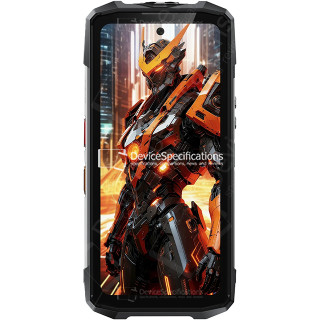
FOSSiBOT F113 Review
Dimensions: 89.2 x 186.2 x 31.6 mm
Weight: 699 g
SoC: MediaTek Dimensity 7050 (MT6877V)
CPU: 2x 2.6 GHz ARM Cortex-A78, 6x 2.0 GHz ARM Cortex-A55, Cores: 8
GPU: ARM Mali-G68 MC4, 950 MHz
RAM: 12 GB, 2133 MHz
Storage: 256 GB
Display: 6.78 in, IPS, 1080 x 2460 pixels, 24 bit
Battery: 20000 mAh, Li-Polymer
OS: Android 15
Camera: 8120 x 6180 pixels, 3840 x 2160 pixels, 30 fps